Showing posts with label philosophical ecology. Show all posts

Friday, June 18, 2021

environmental justice and ecological metaphysics (a gift to myself and Schelling-Peirce-Plato)

C.S. Peirce is usually read from the two volume The Essential Peirce and usually less so from the eight volume The Writings of Charles Sanders Peirce: A Chronological Edition (of which an eight of a projected ten volumes have been published), both published by Indiana University Press. However, as with anything, there is a gold standard. The four volume (printed as two books in each volume) Collected Papers of Charles Sanders Peirce is that gold standard.

Edited by mainly by Charles Hartshorne and Paul Weiss who were graduate students at Harvard at the time, it is the manner in which the texts are assembled that renders them both unique and powerful as a presentation of Peirce's ideas. I've always wanted this set, using the electronic version on CD but finding it difficult to navigate and actually read as I would a book.

Being asked to complete a prominently featured essay on Peirce (which I've just completed for publication) and twelve years after the writing of my dissertation on Peirce (and Martin Heidegger and F.W.J. Schelling, being a Schellingean then and now I live by the rule of thirds), I finally treated myself to this glorious collection.

Just something to cherish, reading the ideas of America's most brilliant philosopher, without whom I wouldn't have found my current home in Naturphilosophie. That home includes (for me, at least) of course C.S. Peirce, but also Schelling, Plato, Hegel, Fichte, Deleuze, Merleau-Ponty, as well as Alfred North Whitehead, Charles Hartshorne - and the lesser known philosophers of Justus Buchler, Paul Weiss, William Ernest Hocking, and John William Miller.

I'll be revisited the Schelling-Peirce-Plato axis in more research to come, focusing on recognizing the rich insights of this triad available for contributing to environmental philosophy. This with an especial eye toward attaining an ideal form of ecological justice which would be inclusive of non-human animals and other sentient forms of life.

Thursday, February 18, 2021

Wolves and Winter Worship

Music by Ulver, from the "Kveldssanger" album (1996) Location: Delaware Water Gap National Forest, Pennsylvania

Location: Lakota Wolf Preserve, Columbia, New Jersey

Music by Sturmpercht, from the album "Geister im Waldgebirg" (2006) Location: Cherry Valley Nature Preserve, Pennsylvania

Monday, January 18, 2021

Schelling's commentary on Plato's Timaeus (1793-95)


 Schelling's attempt to explain creation in terms of nature's "ground" and "existence" is a seminal moment in his thinking. It is by no means surprising that he would turn to Plato's Timaeus to develop that distinction in a type of philosophy of organism or "organicism," which Plato himself had developed implicitly in the Republic and rather explicitly in the Timaeus. Schelling, modeling his own philosophy of organism upon this, makes the most concrete statement of his position in this commentary.

As an aside, for awhile now I've been considering how Schelling and Plato both inform each other's metaphysics in light of what I call an "ecological metaphysics," something extremely valuable in contemporary Continental environmental philosophy, whether through environmental aesthetics, environmental hermeneutics, or semiotic phenomenology - the key being the disclosure, experience of, and interpretation of natural signs and sign processes in the natural world, e.g. Jasperian "cyphers" in light of holistic and inter-related context. 

Continental environmental philosophy hasn't had current meaningful developments since Erazim Kohak's Green Halo and The Embers and the Stars. While much has been done with Merleau-Ponty, or Merleau-Ponty and Schelling together - a task which has by now become rote and shopworn - I think the time is ripe for a fresh perspective, perhaps with the development of this "ecological metaphysics" directly using Plato and Schelling.

Just food for thought.

Link to Schelling's commentary on the Timaeus HERE.

Thursday, October 8, 2020

Updated Syllabus and Course Materials for "The Philosophy of Technology and Organic Being" (Research Seminar and Independent Study)

Updated Syllabus can be found in the course folder HERE, along with most of the readings/texts required for the class. I'm planning to post the lectures on my YouTube channel if I can realistically be consistent in recording them.

Sunday, January 6, 2019

Thinking twice about Kant and correlationism


In my recent readings of Kant, in particular the lectures on anthropology as well as his Anthropology from a Pragmatic Point of View, I came across a well known passage toward the end of the text where Kant discusses the possibility of extra-terrestrial life and its role in understanding human nature.
The highest concept of species may be that of a terrestrial rational being, but we will not be able to describe its characteristics because we do not know of a nonterrestrial rational being which would enable us to refer to its properties and consequently classify that terrestrial being as rational. It seems, therefore, that the problem of giving an account of the character of the human species is quite insoluble, because the problem could only be solved by comparing two species of rational beings on the basis of experience, but experience has not offered us a comparison between two species of rational beings.
He then goes on to develop the distinction between (non-human) animals that are rational, and rational beings. 

It struck me how the age-old (by now) charge of correlationism and anthropocentrism against Kant may be misguided if we take the above into account.  As Heidegger during the '30s for example formulated Daseyn as a "more than human" although encompassing-of-the-human prototype, I see in Kant something similar as he struggles to define the nature of so-called "rational beings."  A sort of transcendending- the-anthropos toward a true non-human rational form of universality which nevertheless encompasses the human but is also beyond the human is in order, according to his project. Perhaps more clearly put, he is struggling to wrestle with a metaphysical ecology of the cosmos and its "Others" vis-a-vis the human yet simultaneously beyond the human.  And so while quite a few today bash Kant in the name of correlationism, his focusing upon the "human-all-too-human" (Nietzsche said Kant did not go far enough) is a paradox as it is none other than Kant who went furthest in speculating upon the Descolian Ecology of Others.

In order to "sketch the character of the species" in its truly universal form, an extra-species or non-human rational being species is desirable to compare, said Kant.  And thus we are forced to move toward a "cosmopolitics" or exo-political notion of what non-human rationality means for rational beings as such.  It is the "as such" part which forces us beyond the terrestrial landscape, for Kant is seeking the truly universal character of what it means to be a "reasoning being" sui generis.


This is quite interesting, I think. For as much as Kant is taken to be a correlationist par excellance' given his categories of the mind and so on, it is nevertheless his drive for universality that seeks to include the content and form of a species of rational beings within experience. This experience, paradoxically, opens up and extends beyond the merely human in its scope.

THIS article had an interesting take on what this might mean for Kant's ethics.  Kant himself had an idea when he speculated of how there may be a race of beings who are unable to think and express a thought unless the thought is spoken verbally.  That is, unless it is outwardly uttered the thought cannot be formed.  This would make lying impossible.  He then uses this speculation as a way to claim that as we human beings are morally perfectable, we ought to struggle toward that perfection and do good (which includes not telling lies, etc.)

As an aside, I thought of extra-terrestrial beings who may be telepathic.  If there is no private I or thoughts which are private, telling a lie would be impossible if these beings are able to remain aware of the contents of anothers' thoughts. Further, I wonder how these beings would regard brutal honesty? Having "heard" it all in the minds of others I am wondering if there is anything which would shock them or cause them dismay. Without anything being hidden there is only brutal honesty.

Regardless, THIS 90-page document was interesting, "Kant's Aliens: The Anthropology and its Others."


Tuesday, August 28, 2018

The Gestation of German Biology: Philosophy and Physiology from Stahl to Schelling (NDPR Review)

NDPR Review, first paragraph and link below.
----
The Gestation of German Biology: Philosophy and Physiology from Stahl to Schelling
// Notre Dame Philosophical Reviews // 


John H. Zammito, The Gestation of German Biology: Philosophy and Physiology from Stahl to Schelling, University of Chicago Press, 2018, 523pp., $45.00 (hbk), ISBN 9780226520797.

Reviewed by Lenny Moss, University of Exeter

In his 2004 review of both Frederick Beiser's German Idealism: The Struggle Against Subjectivism 1781-1801, and Robert Richards' The Romantic Conception of Life and Philosophy in the Age of Goethe,[1] John H. Zammito defines the conversation that shapes the aims and point of departure of his recent book and in relation to which he offers some criteria for assessing its merits. The conversation in question is about critically advancing a new appreciation for the status of German Idealism and Romanticism in relation to contemporary naturalism but even more specifically it's about overthrowing old prejudices against Naturphilosophie and defending its relevance to empirical life science. In the background, but not deep in the background,...


Read More

----

Thursday, August 2, 2018

Eco-phenomenology and Eco-Cosmology

Interesting issue of Analecta Husserliana, "Eco-Phenomenology: Life, Human Life, Post-Human Life in the Harmony of the Cosmos" HERE.  Too many fascinating articles to discuss in a short blog post such as this one is intended to be, thus if the issue's topic sounds interesting for you head on over to check it out for yourself.

Saturday, June 9, 2018

quote of the day


"The relation between living subject and object is unlike that between two objects; for, the subject does not react mechanistically to all object stimuli but rather it assigns a significance or meaning to specific ones."

- Jakob von Uexküll

"Every living cell is a machine operator that perceives and produces and therefore possesses its own particular perceptive signs and impulses or 'effect signs.' The complex perception and production of effects in every animal subject can thereby be attributed to the cooperation of small cellular-machine operators, each one possessing only one perceptive and one effective sign."

- Jakob von Uexküll


(See also "Introducing Uexküllian phenomenology - Powerpoint download" HERE ; "Some resources on biosemiotics + Uexküllian/Peircean phenomenology" HERE ; and an enormously informative post with tons of great information and links on biosemiotics HERE titled, "Mathew David Segall, media ecology, and biosemiotics.")

Monday, June 4, 2018

Lindsay Sheperd on social justice and the environment

If this is true then as Heidegger said, "Only a God can save us now." What Lindsay Sheperd is pointing out is how frankly absurd the act of looking upon the world anthropocentrically truly is.

Sheperd was spot on when she said, "In some instances the outdoors is not safe for anyone."  She was also correct when discussing how, often times, the "healing" power of nature is actually found in its ability, or even power and potential, to "decenter" identity - to completely overwhelm one's sense of self or, if it so chooses, to destroy one's sense of self or one's identity. Nature has the uncanny ability to remind us that it is nature which gets the last vote in determining "what's what" and that how we may conceive ourselves to be - whether precious, special, important, or identifying as x, y, or z - doesn't necessarily mean that that is how we truly are in reality. Such forms of decentering can and many often times do constitute an act of transcendence through sublimity, as the decentering of one's own identity in light of something much larger and much more encompassing is what affords the natural world its healing power and quasi-religious grace. It reminds us that we may not be as special as we think we are, and that the world is not a safe place. The natural world can and will gladly go on without us.

The millennial obsession with "safety" and "safe spaces" is attempting to sanitize the last outpost where these sort of truly educational and revelatory experiences might occur due to the inherent risk, danger, and all-out lack of human identity found there: the wilderness.  Nature, when made "safe," loses its real educational potential and becomes just another stage prop in the human-all-too-human drama of so-called "social justice." In fact, inasmuch as Sheperd is pointing out, "social justice" is far - very, very far - from any form of real environmental justice where human actors are able to take a step back in their obsessive motions of attempting to grab the limelight and think of others for just once. In the name of safety, avoiding risk, and feeling important, millennials are actually committing worse injustices against the environment and failing to achieve any realist ecological understanding of it. That is to say, millennial narcissism and environmental justice really don't fit together hand-in-glove.

The article Sheperd cites is all millennial narcissism gone way too far. As I tell my students in Existentialism on the first day of class: "The universe doesn't give a shit about you."  When one goes hiking in remote environments and witnesses a pristine and well-functioning world that is completely without the human and doing just fine, that truth can be an eye-opening experience for even the most naive helicopter-parented millennial who will usually melt like a snowflake at the first hint that they may not be as special as they've been told. Eventually, nature (read "Reality") will assert itself and its number one (and only) law will show itself to be supreme. And that law? It's quite simple: "Reality Rules."

Link HERE.

Monday, April 2, 2018

Program for Eighth International Congress on Ecstatic Naturalism (April 13th & 14th)

Eighth International Congress on Ecstatic Naturalism

2018 Theme: 
Mind, Semiotics, and Symbols in Nature

Drew University, Madison, NJ – April 13th and 14th

Co-Chairs:
 Leon Niemoczynski (Moravian College) and Robert S. Corrington (Drew University)


All papers, meals, wine, beer, coffee, and non-alcoholic drinks will be in the Founder’s Room of Mead Hall (Administration Building)

Friday April 13th

Registration Table Open all Day and Tomorrow by Desmond Coleman

9:00-10:10: Cosmology

  “Re-Imaging the Human Mind in the Mysteries of Space-Time and the Existence of Gravitational Waves” – Moon Son (Yonsei University)
  “Ecstatic Naturalism and Quantum Physics in Terms of Consciousness”- Wang-Eun Serl (Drew University)

10:30-11:40: Semiotics

  “Ecstatic Naturalist Semiotics of the Sexed Body” – Susan Erke (CUNY)
  “Relations and Insides: Using the Semiotic of John Deely to Think Natural Interiority” – Desmond Coleman (Drew University)

11:50-1:00: Psychoanalysis

  “The Spirit In-Between the Pulsing Heart of Nature: Interrogating Iterative Nihilation as Integral to Ecstatic Difference” – Frank Scalambrino
  “Absolute Void and Bleak Cosmos” – Leon Niemoczynski (Moravian College)

Lunch 1:00-2:00

Group Photograph 2:00-2:30

2:40-3:50: Mind in Nature
  “Mind, Extended. or Artificial, or Naturalized?: An Ecstatic Naturalist Quest for Mind and Nature” – Iljoon Park (Methodist Theological Seminary)
  “Human Mind and Nature’s Mind” – Gene Nasser

4:10-5:20: Eco-Theology and Panpsychism
  “A Study of Eco-Cosmological Theology from a Naturalist Perspective” – SooYoun Kim
  “As so Many Sense-Organs of the Earth’s Soul: The Continuing Relevance of William James’s Reflections on Panpsychism “ – Jonathan Weidenbaum (Berkeley College)

5:30-6:00 Announcement of the Ralph Waldo Emerson Prize for the Best Paper by a Junior Scholar ($500)

Dinner and Reception 6:00-7:30

7:45 – Panel: Interview of Dr. Robert S. Corrington by Dr. Leon Niemoczynski
“Questions Concerning Mind in Nature

Saturday April 14th

9:00-10:10: Expression of Mind

  “On the Participation of Nature in the Emergence of the Sacred: Bateson’s Ecology of Mind, Ecstatic Naturalism, and Environmental Ethics” – Sarah O’Brien (Drew University)
  “Deep Pantheism: Nature Naturing and the Problem of Consciousness” -Thomas Millary

10:25-11:35: Metaphysics

  “Transcendentalist Metaphysics of the Semiosis of Nature” – Nicholas L. Guardiano (Southern Illinois University)
  “The Object Objects: An Animist Turn to the Visceral Semiospheric Commens” – Emile Wayne (Drew University)
 
11:50-1:00: Other Thinkers

  “The Post-human and Today’s Understanding of Paul: ‘The Remnants,’ ‘Becoming’ and the Ecstatic Naturalist Mind” – Ick Sang Shin (Sunkonghoe University)
  “To Find Reality: Bradley and Ecstatic Naturalism” – Guy Woodward

Lunch 1:00-2:00

2:10-3:20: Asian Religion

  “Learning from Water: A Daoist Ecstatic Naturalism” - Jea Sophia Oh (West Chester University)
  “Thinking ‘Creative Integrity’: Non-Coercive Ethical Agency in Ecstatic Naturalism and Confucian Rule Ethics” – Joseph E. Harroff (East Stroudsburg University)

3:35-4:45: Community and Cosmos

  “Beloved Community as Cosmic Symphony” – Rory McEntee (Drew University)
  “ Peirce and Ordinal Psychoanalysis: A Jungian Approach” – Robert S. Corrington (Drew University)         


Concluding Remarks

Refreshments: Dinner on your own


Special Korean Session – Monday April 16th at 3:00 in Seminary Hall

  “The Mind and Nature in the Prophetic Tradition” – Ji Eun Park

Sunday, February 25, 2018

Ethics of the Umwelt

Morten Tønnessen has posted an interesting paper (book chapter, it appears to be) on his academia.edu page. Below is the abstract and then the link.

"Umwelt Ethics"
In this paper I will sketch an Umwelt ethics, i.e., an ethics that rests heavily on fundamental features of Jakob von Uexküll’s Umwelt theory. In the course of an interpretation of the Umwelt theory, a number of concepts are introduced. These include ontological niche, common-Umwelt, total Umwelt and bio-ontological monad. I then present an Uexküllian reading of the deep ecology platform. It is suggested that loss of biodiversity, considered as a physio-phenomenal entity, is the most crucial aspect of the ecological crisis,which can be understood as an ontological crisis.

Link HERE.

Tuesday, February 6, 2018

Umwelt (Aeon video)

Aeon video rendering the ideas of Jakob von Uexküll through the film technique of Yoshiyuki Katayama.

----
Umwelt
// Aeon


A term introduced by the Baltic German biologist Jakob von Uexküll in 1909, Umwelt refers to an organism's internal and limited perceptual experience of the external world. This stunning experimental exploration of the concept from the Japanese artist Yoshiyuki Katayama contrasts flowers blooming at time-lapse speeds with insects and spiders atop them, captured in real time. As these two organisms move at what appear to be similar speeds, the viewer is reminded of the disparate timescales on which they usually operate, and the very different evolutionary goals that they pursue even as they interact with one another.

By Aeon Video
Watch at Aeon

----

Monday, January 8, 2018

How Forests Think: Toward an Anthropology Beyond the Human (mp3 download)


"How Forests Think," lecture on his book How Forests Think: Toward an Anthopology Beyond the Human by Eduardo Kohn.

Kohn was a candidate for the keynote of Ecstatic Naturalism 2018 (the eighth year of the conference!) but lack of available dates during the conference got in the way. It's interesting to know that Kohn privileges C.S. Peirce and his semiotics as a main source of philosophical inspiration. Kohn outright claims that Peirce's semiotics is crucial for his project, which I find interesting. See After Nature post "A Speculative Phenomenology of Non-Human Consciousness" HERE to see the connections. It would have been great to have him as a keynote, as his project overlaps with the theme of the conference so well.

You can listen to the lecture HERE, and see the call for papers to the conference below. Note that papers can still be accepted for a few select spots if arranged ahead of time. Note also the change of conference date.


Eighth International Congress on Ecstatic Naturalism 
April 13th & 14th, 2018
Campus of Drew UniversityMadisonNew Jersey

Theme:
"Nature and the Symbolic in the Human and Non-human"


A central feature of any naturalism is that there is at least some form of continuity between mind and nature – or, that mind "stretches" to meet nature (in the words of John Dewey). But, what is "mind" within a naturalistic register? A basic premise for naturalists such as Charles S. Peirce, John Dewey, George Herbert Mead, Alfred North Whitehead, or Susanne Langer – naturalists in the American philosophical tradition – is that "mind" is essentially symbolic. This is to say that, conceptually, mind is both expressive and representational. This, though, begs the question: what within nature might be able to "think?" As any "ecstatic" naturalism seeks to explore nature's deeply embedded transformational potential, the theme of this year's congress questions nature's potential for "mind" – or "intelligence" - and questions how that mind might be at work within the natural world, especially as expressed by means of symbol. What precisely is nature's potential for expressive intelligence and how is it expressed through symbol and concept? And further, what other than the human might be able to "think?" What does it mean to think? Can machines think? Can forests think? Insects? Birds? Fish? Transcending beyond the boundaries of the human, we seek papers that wish to explore especially non-human modes of intelligence within the realm of the symbolic in order to connect naturalism to applied philosophical fields, whether animal ethics, cognitive science and artificial intelligence, political ecology, biosemiotics, and so on. Papers need not be exclusively about the philosophy of ecstatic naturalism but are encouraged to at least minimally address its perspective before moving on to present a different thesis of the paper so as to place all papers of the congress within the stream of contemporary philosophical naturalism.

Submissions of abstracts 300-500 words in length should be emailed to: niemoczynskil@moravian.edu Paper deadline (no more than 15-20 minutes in length of reading or 6-8 pages double-spaced) of March 1st.

RALPH WALDO EMERSON PRIZE:
GIVEN TO A GRADUATE STUDENT, OR SOMEONE WHO GOT HER OR HIS PhD WITHIN THE PAST FIVE YEARS, FOR THE BEST PAPER BY A JUNIOR SCHOLAR. THE PRIZE COMES WITH A $500 AWARD.

TO QUALIFY FOR THE EMERSON PRIZE, YOU MUST WRITE ON ECSTATIC NATURALISM PER SE. AS IN THE OTHER PAPERS, THE PAGE LIMIT IS 6-8 PAGES. SEND THE COMPLETED PAPER TO EITHER OF THE ABOVE EMAILS BY MARCH 1ST.

THE GENERAL THEME OF THE CONGRESS SHOULD TAKE PLACE WITHIN THE CONTEXT OF RELIGIOUS OR NON-RELIGIOUS NATURALISM AS IN THE PREVIOUS SIX YEARS.

REGISTRATION FEES: $ 75 FOR FACULTY AND $ 25 FOR GRADUATE STUDENTS. SHORTLY WE WILL HAVE AN ONLINE SITE FOR REGISTERING WITH CREDIT CARDS. PERSONS USING CASH OR CHECK CAN REGISTER AT THE CONGRESS.


Tuesday, December 26, 2017

The minds of plants (Aeon)

Memories are thought to be so fundamentally cognitive that some theorists argue that they’re a marker of whether an organism can do the most basic kinds of thinking. Surely memory requires a brain?

"What does it even mean to say that a mallow can learn and remember the location of the sunrise? The idea that plants can behave intelligently, let alone learn or form memories, was a fringe notion until quite recently. 

However, over the past decade or so this view has been forcefully challenged. The mallow isn’t an anomaly. Plants are not simply organic, passive automata. We now know that they can sense and integrate information about dozens of different environmental variables, and that they use this knowledge to guide flexible, adaptive behaviour."

Excerpt from a great article from Aeon which you can read HERE.

See also After Nature posts "Can plants really communicate with each other?"; "Some thoughts on a phenomenology of vegetal life"; and "Mathew David Segall, media ecology, and biosemiotics."

Monday, December 18, 2017

Plato's Timaeus (SEP entry revised)

A long-term goal of mine has been to discover what value might be found in the Timaeus for ecological and environmental philosophy. The German idealist Schelling provides readers of the Timaeus with some clues in his own reading of the dialogue as Schelling's commentary is another highly recommended piece of what Whitehead had called "the philosophy of organism." The below linked SEP entry has been immensely helpful in deciphering possible leads.

----
Plato's Timaeus
// Stanford Encyclopedia of Philosophy

In the Timaeus Plato presents an elaborately wrought account of the formation of the universe and an explanation of its impressive order and beauty. The universe, he proposes, is the product of rational, purposive, and beneficent agency. It is the handiwork of a divine Craftsman ("Demiurge," demiourgos, 28a6) who, imitating an unchanging and eternal model, imposes mathematical order on a preexistent chaos to generate the ordered universe (kosmos). 

Wednesday, November 29, 2017

Aesthetics Today blog on Suzanne Langer

Interesting post wherein Susanne Langer (student of Whitehead) is discussed in quite abit of detail. I thought this was particularly interesting:
[Langer] emphasizes the “semblance of organism.” Dewey stresses that we are live creatures interacting with our environments. Langer tries to keep the two radically separate, but interestingly the value of art is that it reflects us by resembling ourselves as live organisms. “Living organisms maintain themselves, resist change, strive to restore their structure when it has been forcibly interfered with….organisms, performing characteristic functions must have certain general forms, or perish.” (229) Following Aristotle, once again, she stresses that life has necessity, that only life “exhibits any telos” and that the acorn strives to become the oak. Now she stresses that there is “nothing actually organic about a work of sculpture” (230) and yet is gives us “semblance of living form....As Langer puts it “the human environment, which is the counterpart of any human life, holds the imprint of a functional pattern; it is the complementary of organic form” which see sees in terms of the “metabolic pattern” of our both our feelings and our physical acts. But again as opposed to Langer, it is not just complementary or a counterpart; it is just exactly also where we live. To put it briefly: human life is in the human environment...
This brought to mind the Umwelten of Jakob von Uexküll, meaning the perceptual "worlds" in which various organisms exist as subjects, established by the achievement of form through sensuous interaction with their respective environments. I think Uexküll's notion of "significance" and how it functions midway between creature and environment is strikingly similar to Langer's notion of living form and John William Miller's notion of Midworld.

Link to the post at Aesthetics Today blog HERE. More on Langer from After Nature blog HERE. Corry Shore's entry on Jakob von Uexküll HERE.

Saturday, November 25, 2017

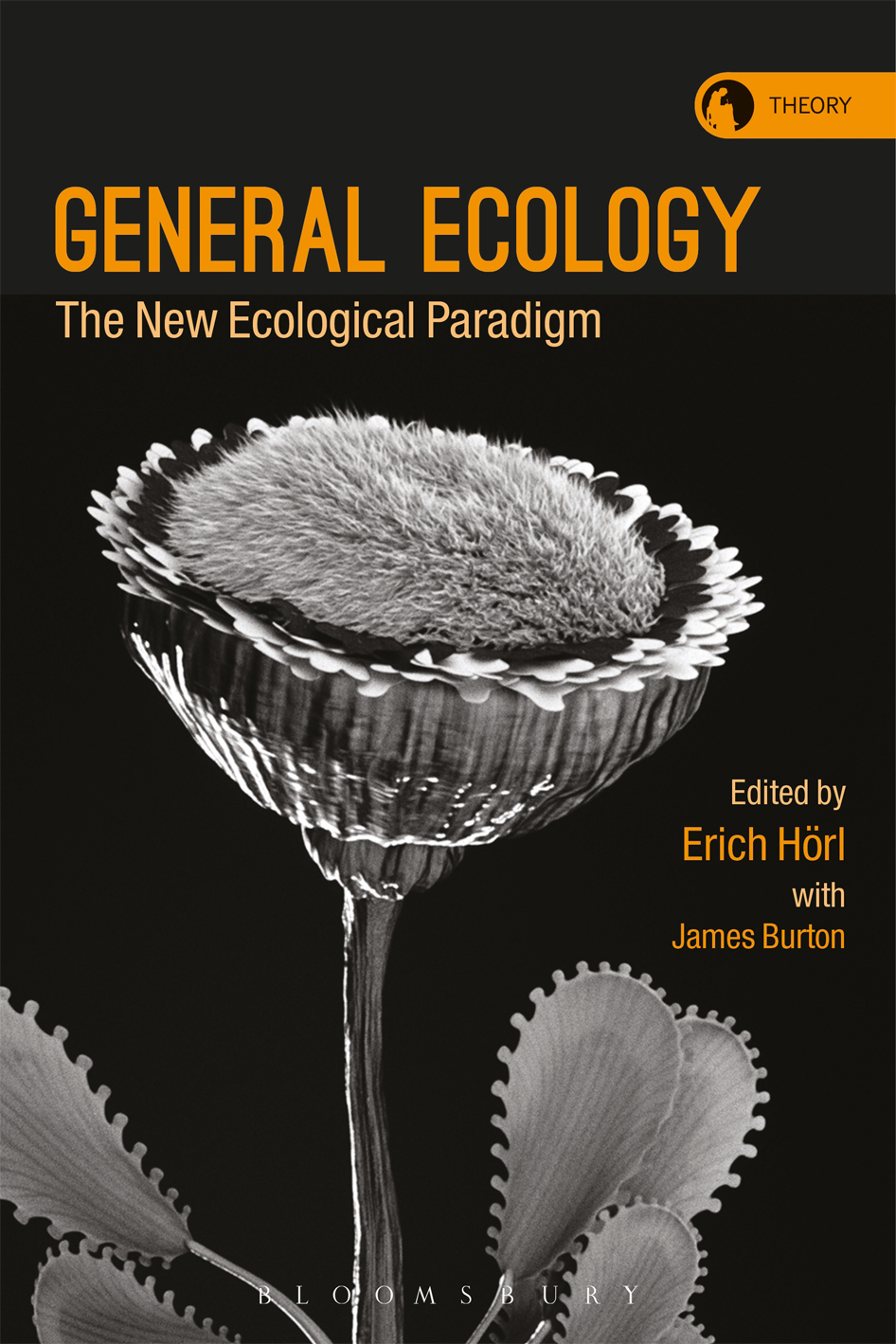
Erich Hörl, James Burton (eds.): General Ecology: The New Ecological Paradigm

Note in Chapter 14 Brian Massumi's wonderful use of C.S. Peirce's concept of "Firstness." The other chapters were available to read too last time I checked.

----
Erich Hörl, James Burton (eds.): General Ecology: The New Ecological Paradigm (2017)
// Monoskop Log


"Ecology has become one of the most urgent and lively fields in both the humanities and sciences. In a dramatic widening of scope beyond its original concern with the coexistence of living organisms within a natural environment, it is now recognized that there are ecologies of mind, information, sensation, perception, power, participation, media, behavior, belonging, values, the social, the political… a thousand ecologies. This proliferation is not simply a metaphorical extension of the figurative potential of natural ecology: rather, it reflects the thoroughgoing imbrication of natural and technological elements in the constitution of the contemporary environments we inhabit, the rise of a cybernetic natural state, with its corresponding mode of power. Hence this ecology of ecologies initiates and demands that we go beyond the specificity of any particular ecology: a general thinking of ecology which may also constitute an ecological transformation of thought itself is required.
In this ambitious and radical new volume of writings, some of the most exciting contemporary thinkers in the field take on the task of revealing and theorizing the extent of the ecologization of existence as the effect of our contemporary sociotechnological condition: together, they bring out the complexity and urgency of the challenge of ecological thought-one we cannot avoid if we want to ask and indeed have a chance of affecting what forms of life, agency, modes of existence, human or otherwise, will participate-and how-in this planet's future."

With texts by Erich Hörl, Luciana Parisi, Frédéric Neyrat, Bernard Stiegler, Didier Debaise, Jussi Parikka, Bruce Clarke, Cary Wolfe, David Wills, James Burton, Elena Esposito, Timothy Morton, Matthew Fuller and Olga Goriunova, and Brian Massumi.

Publisher Bloomsbury Academic, London/New York, 2017
ISBN 9781350014695, 1350014699
xv+384 pages

Publisher
WorldCat
HTML