Thursday, November 8, 2012

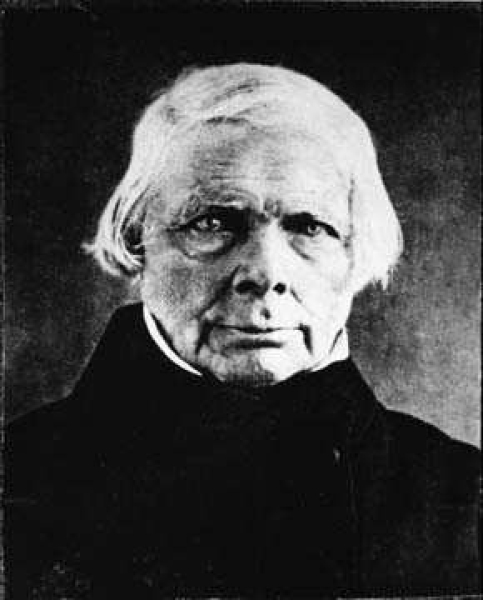
Call for Papers: Futures of Schelling Conference - Western University, Canada

Second Meeting of the North American Schelling Society.  HT Ben Woodard from naught thought blog.  Here is the cfp.  I am definitely submitting to this!

Futures of Schelling: The Second Conference of the North American Schelling Society

Western University London, ON Canada – August 29- September 1, 2013

With the recent resurgence of interest in Schelling he is no longer just a “vanishing mediator” (in Žižek’s phrase) between Idealism and Heideggerian or postHeideggerian thought. Schelling is being read in interesting ways both within this tradition and outside it. The North American Schelling Society’s second annual conference seeks to address the broad theme of the futures that Schelling opens up, in his own work, in the work of contemporaries or predecessors that he helps us to reconceptualize, and in the way his work informs or can inform subsequent and future philosophical, theoretical, and interdisciplinary work. Possible topics might include:
  • How Schelling helps us rethink the work of contemporaries (such as Hegel) or predecessors (such as Boehme)
  • Schelling and subsequents theorists and philosophers who have taken up his work (such as Habermas, Žižek, Heidegger, Nancy)
  • Schelling’s impact on and significance for the style of philosophical thinking and writing
  • Schelling as a returning and retreating origin for disciplines other than philosophy (e.g. psychoanalysis, aesthetics, anthropology)
  • Trends in Schelling scholarship
  • The significance of the analytic utilization of Hegel (by Brandom, McDowell etc.) for Schelling scholarship
  • Schelling’s relation to emerging technologies
  • How Schelling can help us think about the environmental crisis
  • Schelling and the sciences
Good papers that are simply on Schelling are, of course, also welcome. Please send either 1000 word abstracts or completed papers of 3000-5000 words to Tilottama Rajan (trajan@uwo.ca) AND Sean McGrath (sjoseph.mcgrath@gmail.com) by February 1st 2013.

Submissions will be blind-vetted, so please remove all identifying information from the actual paper or abstract.

Tuesday, November 6, 2012

what I'm reading

To the end of completing a new article that I've been sketching in rough outline, I've been reading two philosophers again and again: Plato and Bergson.  To this perhaps unlikely combination I would add another strange bedfellow: Arthur Schopenhauer.

I've just finished up a large chunk of research concerning the implicit normative nature of the dynamic-sensible conditions which are responsible for animating "affective" judgments - especially the sort of judgments involved within the domain of ethics.  My goal is to articulate how those judgments relate to ethical (and perhaps even political) Ideas - a physics of the Idea within the domain of ethical theory, really. 

To my mind, Plato and Bergson are a much, much better combination than, say, Aristotle and Leibniz or Lucretius and Spinoza if one is looking to explore the metaphysical foundations of ethics and affectivity, as those combinations (necessarily, it appears) seem to lead one to either a vast competitive powers pluralism or a reactionary ethical materialism of self-serving "dog eat dog" monads.  (N.B.  I must say, however, that Hartshorne's ethical treatment of Leibnizian monads in Whiteheadian vein - that is, as societies of occasions guided by a dominant monarchical monad, is something that I look favorably upon due to my metaphysical commitment to panpsychism and panentheism.  For more information on that see the section "Social Process," HERE.)   

Still, in my research I seemed to be missing one piece of the puzzle that Bergson was pointing to when it comes to discerning the objective "sources" for morality - sources that cannot be reduced to or found within centers of specifically human consciousness.  Enter one Arthur Schopenhauer. 

I first must say that Schopenhauer made his way into my purview most recently when I was writing about Deleuze and aesthetics (the article that I just published for AJTP).  We also read plenty of Schopenhauer this semester as part of a reading group that we just finished up, "Philosophers of the Unconscious: Schelling and Schopenhauer."  And Schopenhauer's aesthetics is just something that I am generally interested in.  So perhaps it was just a matter of time before I turned my attention to his ethics.

I'll leave this endorsement open for the reader: go read Schopenhauer's book on ethics, The Two Fundamental Problems of EthicsThe point is that even though Schopenhauer would seem to endorse a competitive powers ontology where an infinite number of centers of willing strive to live at the expense of other living things, that is hardly the case.  Rather, Schopenhauer explains how, given such a competition, acts of compassion are possible.  Enter a theory of affectivity, in addition an ethical-aesthetic theory conducive to the sort of ethics of openness and compassion purported by Henri Bergson. 

To boot, Schopenhauer's ethics of affectivity knits well with animal ethics; that is, of explaining how genuine acts of compassion are possible among all living beings, not just the human, and so we are urged toward an openness of affectivity and relation "beyond" the human, to human and nonhuman alike.

"Transcendence" thus first means: crossing that limit which encloses the human being.

Monday, November 5, 2012

mathematics, vitalism, genesis


Mathematics, Vitalism, Genesis

This paper examines Deleuze's critical relation to the vitalist tradition by looking at the ways in which he uses differential calculus as a philosophical rather than mathematical concept. This has direct implications not only for the ways in which we approach art philosophically, but also for the ways in which we think about art's relation to time.

Claire Colebrook (Penn State University)

probing the idea of nature

I came across this today, not knowing that the essay was online: Justus Buchler's rather famous essay, "Probing the Idea of Nature."  The essay is found as an appendix essay in Metaphysics of Natural Complexes.

Buchler's metaphysical approach anticipates many contemporary categorical determinations of natural items in the universe given his own dual concepts of "natural complex" and "order."  Additionally, his concepts of "ordinality" and "ontological parity" both answer to the empty husked nature of anti-theological sensu stricto material ontologies that hide within what I call "stone age naturalism" - an antiquated form of naturalism which touts being "flat," despite requiring "depth" in order to explain the fleeing inner life of what is naturally complex (thus a motion toward a secret interior - transcendence - the deep "supernatural" interior of innumerable orders and complexes among innumerable continua, broken by innumerable discreta).  

As I interpret ordinal ontology, it seems that depth signals the locus production-point of a complex, of a "perspective" (Buchler would not read panpsychism into his complexes and orders). The production-point of a complex is each complex's own aesthetic and semiotic but also mathematizable interior (being individuated as an order which is always naturally complex), a space of possible communicative expression, each complex its own interior point of self-expression and zone of "being-related" - whether to its own future-temporal self or to other complexes - by virtue of possessing an infinitesimal infinitizing power - the generative source for any complex's meaning-activity whether fleeing or persisting, relating or individuating, constituting or being constituted.  

Buchler wrote his dissertation on C. S. Peirce, "Charles Peirce's Empiricism," and he was a philosophical sparring partner of Whitehead, Dewey, and Hartshorne.

Here are some relevant pieces about Buchler, if one is interested.  All are written by Robert S. Corrington (as found on his own website) whose philosophy is inspired by Buchler's metaphysics, as by others as well.
  1. "An Appraisal and Critique of Alfred North Whitehead's Process and Reality--corrected edition (1929 & 1978) and Justus Buchler's Metaphysics of Natural Complexes--second, expanded edition (1966 & 1990)," (Published by author, 2009). [download]
  2. "Horizons and Contours: Toward an Ordinal Phenomenology," Metaphilosophy, Vol. 22, No. 3, 1991, pp. 179-189. [download abstract]
  3. "Conversation Between Justus Buchler and Robert S. Corrington," The Journal of Speculative Philosophy: New Series, Vol. 3, No. 4, 1989, pp. 261-274.  
  4. "Justus Buchler's Ordinal Metaphysics and the Eclipse of Foundationalism," International Philosophical Quarterly, vol. 25, No. 3, September 1985, pp. 289-98. Winner of Greenlee Prize . [download]

Sunday, November 4, 2012

Call for Papers: "From Aesthetica to Aesthetic Theory" (German Aesthetic Theory Since 1700) - Emory University Graduate Philosophy Conference

By now I'm sure most know about the upcoming Villanova and Duquesne Graduate Philosophy conferences (cfp's HERE and HERE respectively), as those links have been posted on several blogs already. 

Here is one by Emory which hasn't made the rounds so I'll post it.  It certainly looks interesting (short link HERE):


Call for Papers:

From Aesthetica to Aesthetic Theory:

German Aesthetic Theory Since 1700

Keynote Speaker: Rachel Zuckert, Northwestern University
Emory University (Atlanta, GA)
April 26-27, 2013

“Artificial aesthetics, or the science of the beautiful… dissolves, as far as it is able to do so, precisely that which was habitual, that which was beautiful nature, and, as it were,destroys it in the same moment. It is precisely that beautiful confusion–which, if it is not the mother, is at least the inseparable companion of all pleasure–that artificial aesthetics dissolves and seeks to illuminate with distinct ideas: truth takes the place of beauty.” – J.G. Herder, Critical Forests: Fourth Grove

18th century German philosopher Alexander Baumgarten is credited with coining the term aesthetics as deserving of its own philosophic study. In the centuries following Baumgarten aesthetics remained an inextricable part of German intellectual history. Aesthetics and the philosophy of art can be traced through the work of Herder, Kant, Schiller, Hegel, Schelling, Heidegger, Adorno, Gadamer, and Sloterdijk, to mention only a few. This conference seeks to address the importance and impact of the German aesthetic tradition, from its inception in the 18th Century to the present. Some questions we hope to address are: Does aesthetics offer a special case for study of subjectivity and intersubjectivity? How does the aesthetic experience and art influence our interactions with and within the world? Can works of art (and aesthetics, more broadly) affect, and even institute, ethical and political communities? What role, if any, does universality play in standards of taste? What is the significance of the emergence of the German aesthetic tradition in response to the Enlightenment? We would also welcome all submissions addressing the relation of aesthetics and nature in the German aesthetic tradition, including but not limited to: beauty and the sublime, expressivism, the relation of the body to the work of art and nature, the relation of the German aesthetic tradition to other traditions, and the relation of aesthetics to other areas of philosophy.

Papers from all philosophical perspectives are encouraged. Submissions should be sent as .docx, or .doc, and should not exceed 15 double-spaced pages. Personal information should be sent in the body of the email and should not appear on the paper itself. Email submissions to Osman Nemli at: onemli@emory.edu

SUBMISSION DEADLINE: JANUARY 15, 2013

Monday, October 29, 2012

the fantasy of speculative realism: Zupančič on Meillassoux and SR (VIDEO/MP3 from Oct. 2012)

Alenka Zupancic, Slovenian philosopher and psychoanalyst, discusses Quentin Meillassoux and After Finitude, speculative realism, Jacques Lacan, Immanuel Kant, psychoanalysis, fantasy, the discourse of science, materialism, contingency, nature, correlation, and Slavoj Žižek...

The foundation for Alenka Zupančič's philosophical work is influenced primarily by Slovenian Lacanian scholars, such as Mladen Dollar and Slavoj Žižek, but also uses the tools and methodologies of classical philosophers, including Immanuel Kant, Georg Wilhelm Friedrich Hegel, and Henri Bergson.

Zupacic will be speaking at this year's Villanova University Philosophy Graduate Conference - Apocalyptic Politics: Reframing the Present.  HT dmf. 

Wednesday, October 24, 2012

Conditions of Possibility CUNY Panel: Žižek, Hägglund, Johnston (VIDEO from Oct. 2012)

Description: Slavoj Žižek joins Martin Hägglund and Adrian Johnston in a discussion about “Conditions of Possibility,” with respect to philosophy, literary theory, religion, and psychoanalysis. Drawing on such diverse and archetypal figures as Kant, Hegel, Freud, Derrida, and Lacan, the panel will explore the notion of philosophical critique and its transformation in contemporary theory.

I'd love to tangle with Hägglund and Johnston (Johnston especially, I was working on something in response to his paper awhile back).  Per questions at end: I see the point, but the first or second question posed at the end of the talk picks out how Hägglund and Johnston seem to be begging the question with respect to substituting one transcendental argument for another (instead of demonstrating the need for preferring a specific set of nonreductive material-dynamical conditions -  i.e., logical-negative annihilation, rather than hyperchaotic creative-positive addition). 

Whitehead Conference - Claremont Graduate School

Experience and Reality - Conference on Whitehead at Claremont Graduate School - November 29th-December 1st, link HERE.  HT Jason/immanent transcendence blog.

Monday, October 22, 2012

Papers from MaterialismS "the Ontological Turn in Contemporary Philosophy" Conference - Porto Alegre, Brazil (Oct. 2012)

See this LINK for some of the papers, or use this LINK for a break down of the conference.

In particular I am looking for Steven Shaviro's paper, "Uncorrelated Thought." THIS paper, "Notes Toward an Aesthetics of Thought" also stood out as a very interesting piece, as did THIS commentary (on Shaviro's paper which I am looking for).

If anyone has mp3s of this conference please get in touch.

Friday, October 19, 2012

an unexpected visitor


While on Kittatinny Ridge we met an unexpected visitor who was hiding in a tree: a very friendly porcupine.


Thursday, October 11, 2012

conference: continental philosophy of religion and the new metaphysics (feat. John Caputo)

Continental Philosophy of Religion and the New Metaphysics
(feat. John Caputo)

The conference will be a one day event (exact date tba, but in spring 2013), and we plan to feature a few big names to be announced soon.

The theme of the conference explores the relationship between continental philosophy of religion and "the new metaphysics" (speculative realism but also other forms of contemporary metaphysics, i.e. process, new materialist, actor-network, etc.), identifying possible routes of exploration as well as areas of influence and cross-over.

Philosophical naturalism (Brassier), the divine inexistence (Meillassoux), the Absolute (Grant), or factish gods (Latour) are some possible starting points, but one could also see discussion of historical figures as well: Bergson, Deleuze, Schelling, Hegel, and Whitehead, for example.  Topics such as process-relational philosophy, new materialism, speculative idealism, neo-vitalism, and actor-network theory will be of central importance for the conference, and speculative realism in its most contemporary forms will be a major point of discussion as it bleeds into its continental philosophical antecedents, especially vis-a-vis thinking about religion, theology, and the Absolute.

If you'd like to get in touch about the possibility of presenting, email me for details.  Again, an "official" CFP should go out late November.